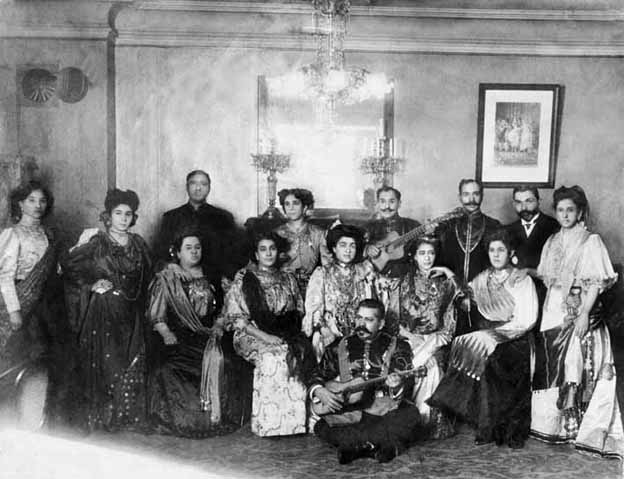
Say the words “Gypsy song” and the imagination almost immediately produces a familiar scene: a guitar, a campfire, a rushing rhythm, a long skirt and a voice filled with anguish. The image is so familiar that it seems ancient. Yet it brings together different eras, different peoples, theatrical convention, the Russian urban romance, cinema and the genuine songs of Romani families. To hear the Romani song itself, we must gently draw this beautiful but overly dense scenery aside.
There is no single “Gypsy music” that remains the same from Spain to Russia. Roma live in many countries, speak different dialects, belong to different historical groups and have spent centuries creating music in dialogue with the cultures around them. Flamenco, Balkan brass music, Hungarian ensembles, jazz manouche and the Russian Gypsy romance are connected with Romani performers, but they do not form a single musical language. It is therefore more accurate to speak not of one genre, but of many Romani musical traditions.
The Romani song is not a museum object preserved without change. It lives in the voice. It passes from one person to another, alters individual words, absorbs the language of the country in which it is sung, and sometimes returns through theatre, a record or a film in a new form. Its history is not a straight line, but a road with many branches.
The essential distinction: a Romani song belongs to the song culture of Romani communities. A piece described as a “Gypsy song” or “Gypsy romance” in an old Russian publication may be the work of a Russian author, a theatrical stylisation, or a song transformed by Romani performance practice. The label alone does not prove its origin.
Songs and their stories
The catalogue brings together Alex Kryve’s performances from this project. Each song has its own page with music, lyrics, history and sources.
Open the song catalogue →THE LONG ROAD FROM INDIA TO EUROPE
For a long time, the history of the Roma was told from the outside — through assumptions, legends and names given by neighbouring peoples. Today, the history of the language allows us to see a much more reliable path. Romani belongs to the Indo-Aryan branch of the Indo-European language family. Its grammar and oldest layer of vocabulary connect the ancestors of the Roma with the Indian subcontinent. Later borrowings from Persian, Armenian and Greek allow researchers to reconstruct a westward movement through Persia, Armenia, Asia Minor and the Byzantine world into Europe.
This does not mean that a single caravan once left India and reached Russia several centuries later. Migration took place in waves. Communities divided, remained for long periods in different lands and entered into new cultural relationships. By the time Roma began to appear in European written sources, they no longer formed one homogeneous group.
Different Romani groups entered the territories of the future Russian Empire by different routes. The Ruska Roma developed in contact with the East Slavic and Baltic regions; the Servi were historically connected with Ukrainian lands; the Crimean Roma with Crimea; and later the Vlax Roma, Lovara and Kalderash arrived in the empire. The expansion of the empire’s own borders also incorporated lands where Romani communities were already living. For this reason, the question “When did the Roma come to Russia?” has no single date. It is a history of several migrations and several regions, stretching from the seventeenth to the early twentieth century.
Language, crafts, family memory and music travelled with each group. But music did not move inside a sealed vessel. It encountered Ukrainian, Russian, Belarusian, Polish, Romanian, Hungarian and Balkan song traditions. New forms arose from these encounters.
WHAT DO WE MEAN BY A ROMANI SONG?
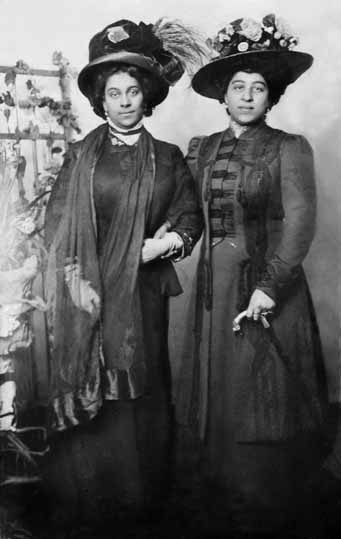
A folk song is often defined as a work whose author is unknown. For Romani tradition, this is not enough. The creator’s name may have been forgotten. An authored song may have circulated orally for decades. A melody may have been borrowed while the words were completely changed. A song may also have entered a family or community repertoire from the theatre and gradually come to be regarded as “old.”
Songs in Romani
These are songs whose text exists in one of the dialects of Romani. Yet even here we cannot automatically assume great antiquity. They include folk, authored, theatrical and contemporary works.
Bilingual and Mixed Songs
Romani and Russian may coexist within a single text: a Russian verse and a Romani refrain, individual Romani forms of address inside a Russian line, or two parallel versions of the same song. For a culture that has lived for centuries between the family’s internal language and the language of the surrounding society, such mixture is natural.
Songs of Neighbouring Peoples in Romani Performance
Romani performers did not only preserve their own songs. They also reinterpreted Russian, Ukrainian, Romanian and other local repertoires. They might alter the tempo, melodic turns, the shape of a verse, the placement of climaxes and the very manner in which the words were delivered. In this way, a work of another origin could become part of a living Romani repertoire without necessarily becoming a Romani folk song.
Authored Songs That Became Shared Memory
In the nineteenth century, leaders of professional Romani choirs — among them Nikolai Shishkin, Rodion Kalabin and Maria Gubkina — wrote lyrical songs and romances in both Russian and Romani. Many works lived for a long time within the performing community, where the boundary between an authored composition, a variant and oral tradition gradually became blurred.
This is why the phrase “traditional Gypsy song” must be checked. Sometimes it is accurate. Sometimes it conceals an author. Sometimes it refers only to a stage image. And sometimes it describes a Russian song to which Romani performers gave a new life.
SONG AS ORAL MEMORY
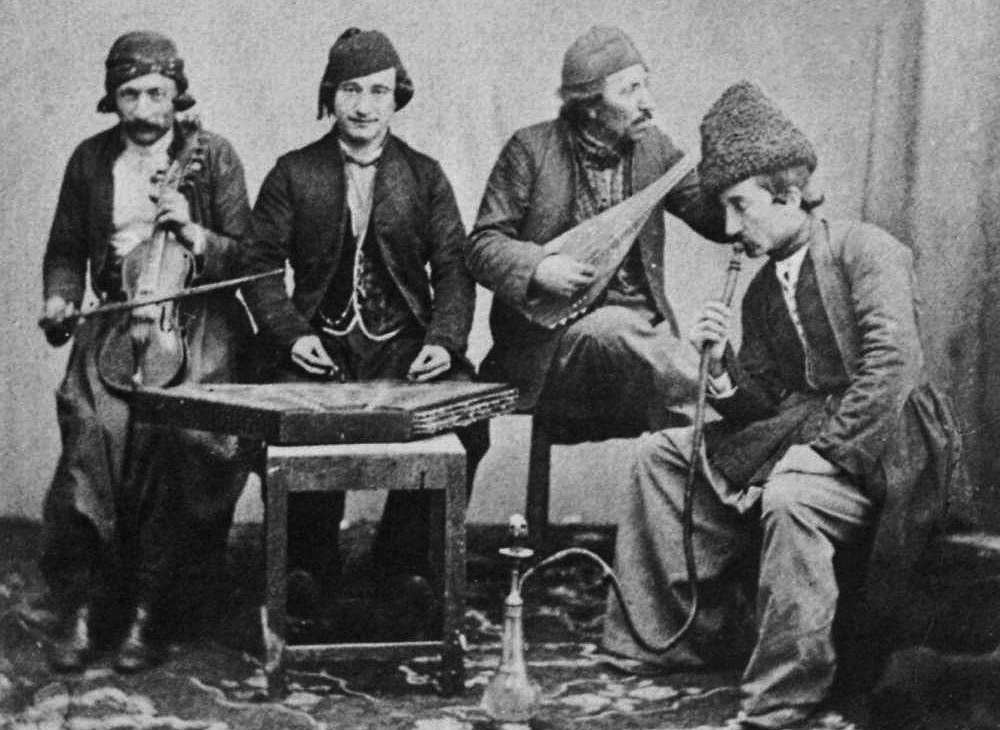
In a culture where writing was not for a long time the principal means of transmitting experience, a song served more purposes than entertainment alone. It could preserve a family history, speak of separation and return, mourn the dead, or accompany a wedding, a journey, a celebration or an everyday gathering. At the same time, it remained the performer’s personal statement.
Oral tradition almost never preserves a work word for word. One singer changes a word because that is how their family speaks. Another repeats a particularly important line. A third joins two verses from different variants. The melody adapts to the voice, while the length of a phrase adapts to breath and emotional circumstance. What emerges is not one uniquely “correct text,” but a family of related versions.
This is not evidence of a damaged original. Variation is one of the fundamental ways in which an oral song exists.
In the twentieth century, however, family transmission was joined by theatre, radio, the gramophone record, magnetic tape and cinema. A recorded performance began to be treated as an authority. Sometimes the version of a famous artist displaced earlier variants. This creates a trap: a song appears to be an old folk song because it has been sung on stage for many decades, even though its particular text, melodic edition or arrangement may have a known author.
The repertoire of Moscow’s Romen Theatre demonstrates this complexity particularly well. Songs in Romani, mixed Russian-Romani texts, Romani folk songs, Russian romances and Russian music in distinctive Romani interpretations existed side by side. The theatre preserved a tradition and simultaneously created a stage canon. Cinema later carried that canon throughout the Soviet Union.
For this reason, a recording labelled “Romen Trio, 1974” is extremely important to the history of performance, but it does not by itself answer the question of a song’s origin. It documents a particular edition: its selection of verses, pronunciation, distribution of voices, tempo and arrangement. Everything that came before it must be investigated separately.
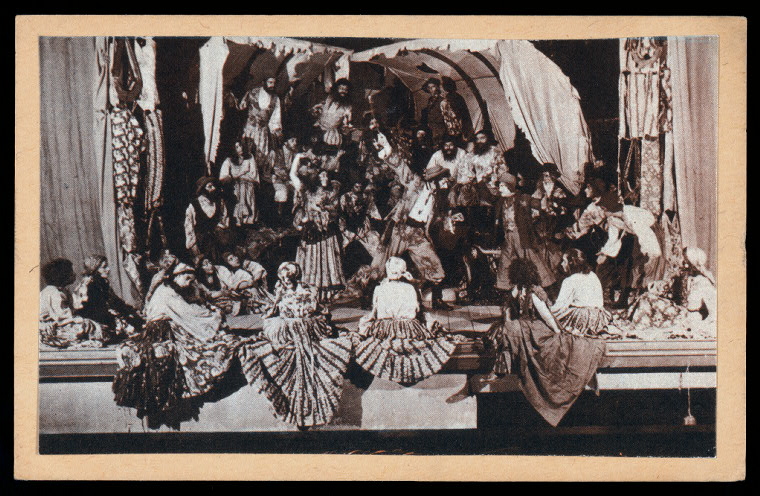
The theatre preserved a tradition and simultaneously created a stage canon.
A LANGUAGE THAT EXISTS IN THE PLURAL
The phrase “translate from Gypsy” makes it sound as though we were dealing with one completely standardised language. In practice, Romani exists in a large number of dialects. They are related, but differ in pronunciation, vocabulary, grammatical forms and the influence of contact languages.
The Northern Russian dialect of the Ruska Roma is especially important in the Russian context. Yet other varieties — Vlax, Kalderash, Lovari, Servi and others — have also been and continue to be spoken alongside it. Speakers of two distant dialects do not always understand one another without difficulty. There are also mixed forms of speech in which the grammatical base of the surrounding language is combined with Romani vocabulary.
Similar lines in different sources may therefore differ for reasons other than error. We may be looking at different dialect forms, different family variants, the influence of Russian pronunciation, a text written down by someone who did not know the language, the adaptation of a word to a melody, or a later stage edition.
This matters especially in song. A printed score may present the words in one way, a folklorist in another, and a singer in a third. If every variant is mechanically “corrected” according to a modern dictionary, the real features of a historical performance may be destroyed.
How We Will Work with Song Texts
For every song, several layers must be kept separate:
- the words of the particular performance we hear;
- the Romani text in the source’s own orthography;
- a normalised Romani version, when necessary;
- a practical phonetic guide for a Russian-speaking singer;
- a literal translation;
- a literary translation;
- information about the dialect and any uncertain words.
In this way, a Russian phonetic guide will not be presented as the original text, and convenience for a singer will not replace philological accuracy.
WHY ROMANI IS WRITTEN IN CYRILLIC
This is where terminology can become especially confusing. Cyrillic letters do not make a text Russian, just as Latin letters do not make it English.
Writing and Orthography
When a Romani text is written in Cyrillic according to an established system, it is a Romani text in Cyrillic script. This is a full written form of the language.
Transcription
When the purpose is to convey the approximate sound of a particular performance in Russian letters for someone who cannot read Romani orthography, this is practical phonetic transcription. Its primary question is: “How should this be pronounced?”
Transliteration
When an already written text is systematically transferred from one alphabet to another — for example, when mange becomes мангэ — this is transliteration. It represents the signs of one writing system with those of another, although transliteration and phonetic guidance are often combined in song publications.
How Cyrillic Became a Historical Tradition
For most of its history, Romani was transmitted orally. When Romani printed texts began to appear in different countries, they were written in the script of the surrounding society: Latin, Cyrillic, Greek and, on occasion, Arabic. Romani therefore has no single “natural” alphabet that has belonged to it since antiquity.
In Russia, Cyrillic was an obvious practical foundation. It was already used by authors, teachers, publishers and some Romani readers. But an important change came in the 1920s. As part of the Soviet policy of creating writing systems for national-minority languages, Nikolai Pankov, Nina Dudarova and the linguist Mikhail Sergievsky developed a literary norm based on the Northern Russian dialect of the Ruska Roma. On 10 May 1927, the People’s Commissariat for Education approved a Cyrillic-based Romani alphabet.
The choice was deliberate and practical. New Romani books had to be accessible not only to the small number of literate Roma, but also to Russian-speaking teachers and assistants. At the same time, the alphabet was adapted to the sounds of Romani; words were not merely written down “as they sounded.”
Between 1925 and 1938, the Soviet Union carried out a unique programme of Romani-language publishing. Primers, school textbooks, story collections, translations, social and political texts, and children’s books appeared. According to RomArchive, the number of original and translated titles approached three hundred. Cyrillic and the Northern Russian dialect formed the foundation.
The programme was brought to an end in the late 1930s. A unified norm had not had time to become common to all Romani groups, and dialect differences did not disappear. Later authors continued to use a variety of Cyrillic and Latin systems.
Today, international projects more often choose the Latin alphabet. It makes communication between countries easier and does not tie the language to one state. Yet there is still no single orthography used by all speakers of Romani. Many people write according to the practices of their country of residence or devise a convenient spelling for a particular dialect.
The question “Why is this text written in Cyrillic rather than Latin?” therefore has a simple answer: because Romani can be written in both systems. For the Ruska Roma, Cyrillic has its own history and is not a sign that the text is incorrect or secondary.
HOW A SONG CHANGES ON ITS WAY TO THE LISTENER
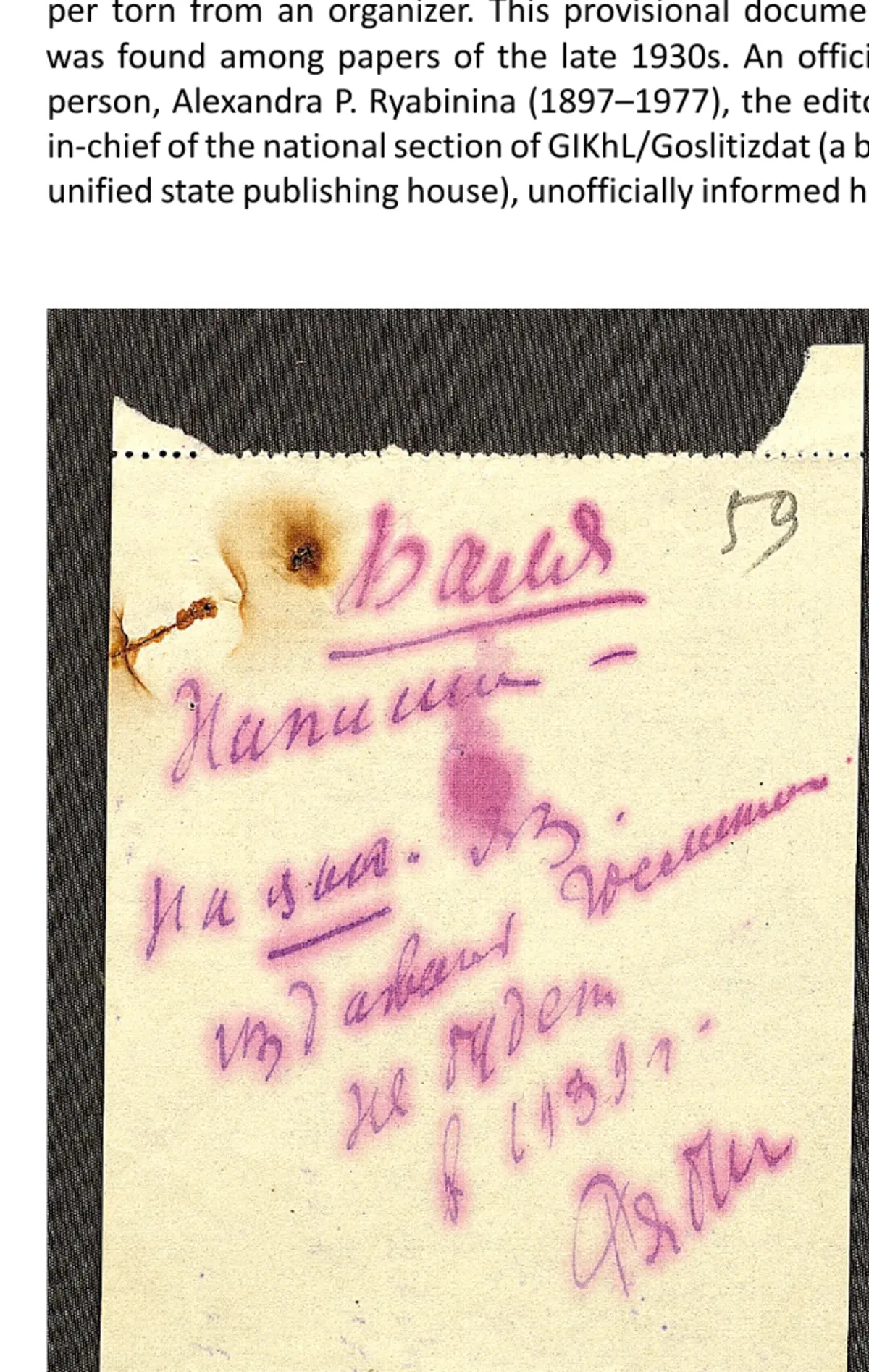
Imagine an old song in Romani. At first, it exists within a family performance. A collector then hears it and writes it down in Cyrillic. Another singer changes a verse. An ensemble director creates a stage composition. An edited text appears in a printed songbook. The theatre adds polyphony, while cinema shortens the song to three minutes. Several decades later, a viewer calls the film version “the original.”
At every stage, something important is preserved — and at the same time, a new object is created.
For our project, finding a complete text online is therefore not enough. We will ask seven questions of every song:
- In what language and dialect is it sung?
- Where and when was the earliest known version documented?
- Are the lyricist and composer known?
- Which verses belong to an early version and which appeared later?
- What did a particular performer or ensemble change?
- Are there separate rights in a translation, adaptation, arrangement or recording?
- How can the pronunciation be written down without presenting a singer’s guide as scholarly orthography?
This method is especially important for songs such as Nane Tsokha, Solnyshko and Mamenka, da kupi mange shalyonochku. A familiar Soviet recording may be an excellent model of performance, but research must continue further — towards early texts, scores, field recordings, and variants preserved in different family and theatrical traditions.
A SONG THAT NEVER STANDS STILL
The Romani song did not come into being once and for all in a finished form. It carries the trace of the language’s distant origin, the memory of centuries of movement and the experience of life among different peoples. An Indian root, a Greek or Slavic borrowing, a Russian melodic inflection and a performer’s voice capable of changing everything with a single pause may all meet within it.
This is why the Romani song cannot be reduced to a campfire, a theatrical costume or one famous film. Nor can it be torn away from the cultures alongside which it grew. The authenticity of Romani song lies neither in isolation nor in immobility. It lies in transmission: from voice to voice, from family to stage, from an old recording to a new performer.
To bring such songs back today, it is not enough to reproduce a familiar melody. We must hear the language from which it came, who sang it, who wrote it down, what changed along the way — and where, behind the beautiful stage image, a living human memory continues to sound.
EDITORIAL NOTE
In historical contexts, this article retains such expressions as “Gypsy song,” “Gypsy choir” and other names found in archival sources and older publications. When referring to the people, the language and contemporary culture, it uses the terms Roma, Romani and the Romani language. The next independent article in this series will examine the Russian Gypsy romance as an urban and theatrical genre.
Sources & Collections
Academic research, museum, library and archival collections used to ground this article.
- 01Council of Europe — Roma History Factsheets
- 02Council of Europe — From India to Europe
- 03Council of Europe — Russian Roma
- 04RomArchive — Is There Such a Thing as Romani Music?
- 05RomArchive — Romani Literature in Russia and the Soviet Union
- 06RomArchive — Children’s Literature
- 07RomArchive — Teatr Romen
- 08RomArchive — Life on Wheels (1931)
- 09University of Manchester Romani Project — Writing Romani
- 10Institute of Ethnology and Anthropology, Russian Academy of Sciences — Romani Groups and Migrations
- 11Viktor Shapoval — Romani Publishing Activities in the Soviet Union, 1927–1938
- 12Museum of Romani Culture, Brno