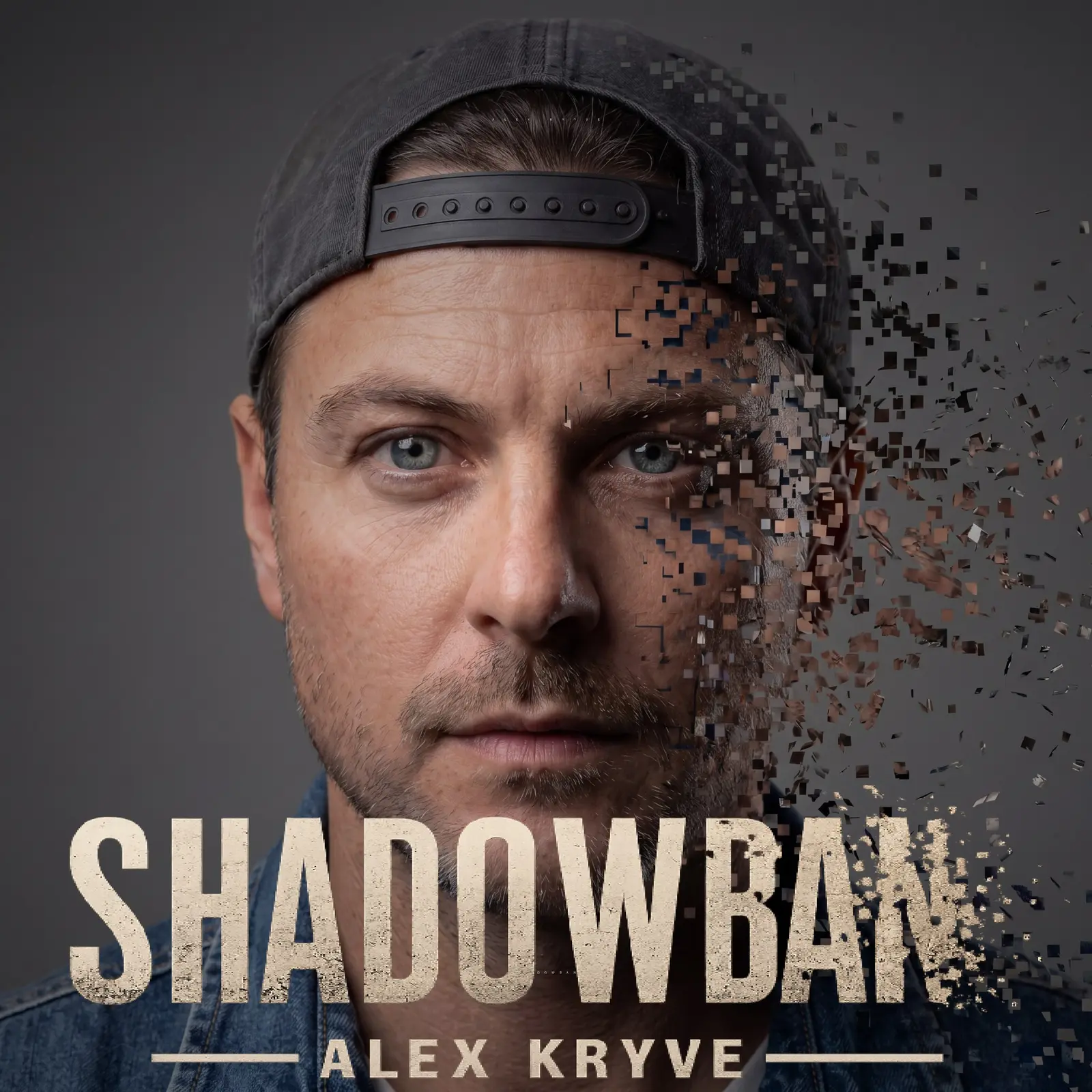
How Shadow Ban found its voice
Open the chapters one at a time. The complete author’s story is preserved.
01It Was Never Supposed to Become a Song
+
Shadow Ban appeared completely unexpectedly.
I have never been particularly fond of social media. I have always felt that it can become a thief of time, and for years I tried not to spend much of my life there.
But when you work as an independent artist, social media eventually becomes part of the professional infrastructure around you. Distributors, streaming platforms and artist verification systems expect you to have some visible presence online.
So I created new pages. Not because I had suddenly decided to become a social media person. Quite the opposite.
For a while, I barely paid attention to them. And somehow, they began to live a life of their own.
02When the Audience Arrived
+
Everything changed when we started performing again. After the concerts, people began finding me online.
I was not running some carefully designed social media strategy. There was no elaborate growth plan. People simply came after the shows.
After one concert, hundreds of new people could appear almost overnight. Within a relatively short period of time, my Facebook pages had grown to several thousand followers.
For someone else, that number might not sound extraordinary. For me, it was enormous—not because of the number itself, but because behind that number were real people.
Sometimes there were hundreds of messages. If a person took the time to write to me, I felt I should answer like a human being. That quickly became almost impossible to manage. But it was also beautiful. There was real communication happening there.
03Then Things Became Strange
+
The rapid growth was followed by something much less pleasant: attempts to access the accounts, phishing and suspicious activity.
Eventually Meta's systems decided that something about the activity surrounding my accounts looked suspicious. My personal Facebook profile and my artist page were blocked. Later, other connected accounts were affected as well.
I did everything the platform asked: identity verification, documents, photographs, face verification—everything.
The review found no violation. The pages and even the publication that had apparently triggered the problem were restored. I thought the story was over. It wasn't.
04Verified by a Human. Blocked Again by the Algorithm.
+
After the review cleared the account and restored the content, the automated system flagged it again. And I was blocked again.
The identity-verification procedure had already been used. The system considered that step completed, and there was no second opportunity to go through the same process.
We tried support channels and searched for another route, but the accounts remained inaccessible.
People later told me that they thought I had blocked them. They could no longer find me, see the page or contact me. But I hadn't blocked anyone. I was the one who had disappeared.
05Starting Again
+
Eventually, I had to create a new page. Even that was not simple.
For a while, the new account remained heavily restricted. I could barely post, write messages or interact normally. It existed, but it was almost invisible.
That was when the situation stopped being merely an annoying technical problem. There was something almost surreal about it.
You exist. Your work exists. Your audience exists. People are looking for you. And yet an automated system can make it appear, almost instantly, as though you are no longer there.
06Somewhere in America, the Song Started Playing in My Head
+
By that time I was already in the United States. Somewhere in the middle of all of this, Shadow Ban simply started appearing in my head.
It began to sing itself. The words came very quickly. So did the music.
There are songs you spend a long time searching for. And then there are songs that seem to arrive already knowing what they want to say.
Shadow Ban was one of those. Within a very short time, it was ready enough for us to try it live.
07The Audience Knew Exactly What It Was About
+
We played it at one of the next shows. People immediately picked it up. Then we played it again. And again.
By the third performance, the whole room was singing it with us. That was the moment I understood that this was no longer only my story.
After the shows, people told me about accounts restricted without explanation, pages disappearing, access lost and audiences suddenly unable to find them.
I am still here. Why has the digital world decided that I am not?
08Why ‘Shadow Ban’?
+
Technically, what happened to my accounts was more complicated than the usual meaning of the term shadow ban. There were actual blocks, restrictions and accounts that became inaccessible.
But the title described the feeling much better than any technical definition could.
Shadow Ban is not simply a song about Facebook. It is about visibility—about what happens when a system stands between a person and other people.
You speak. You create. You perform. People are looking for you. And somewhere between you and them, an algorithm decides whether you can be seen.
09The Irony
+
An algorithm helped make me disappear. And the result was a song that people started singing together in a room.
No feed. No recommendation system. No reach statistics. No algorithm deciding whether they should hear it. Just musicians onstage and people singing back.
Shadow Ban became a reminder that connection between people still exists outside the screen.
And sometimes the best answer to becoming invisible is simply to make enough noise to be heard.
— Alex Kryve