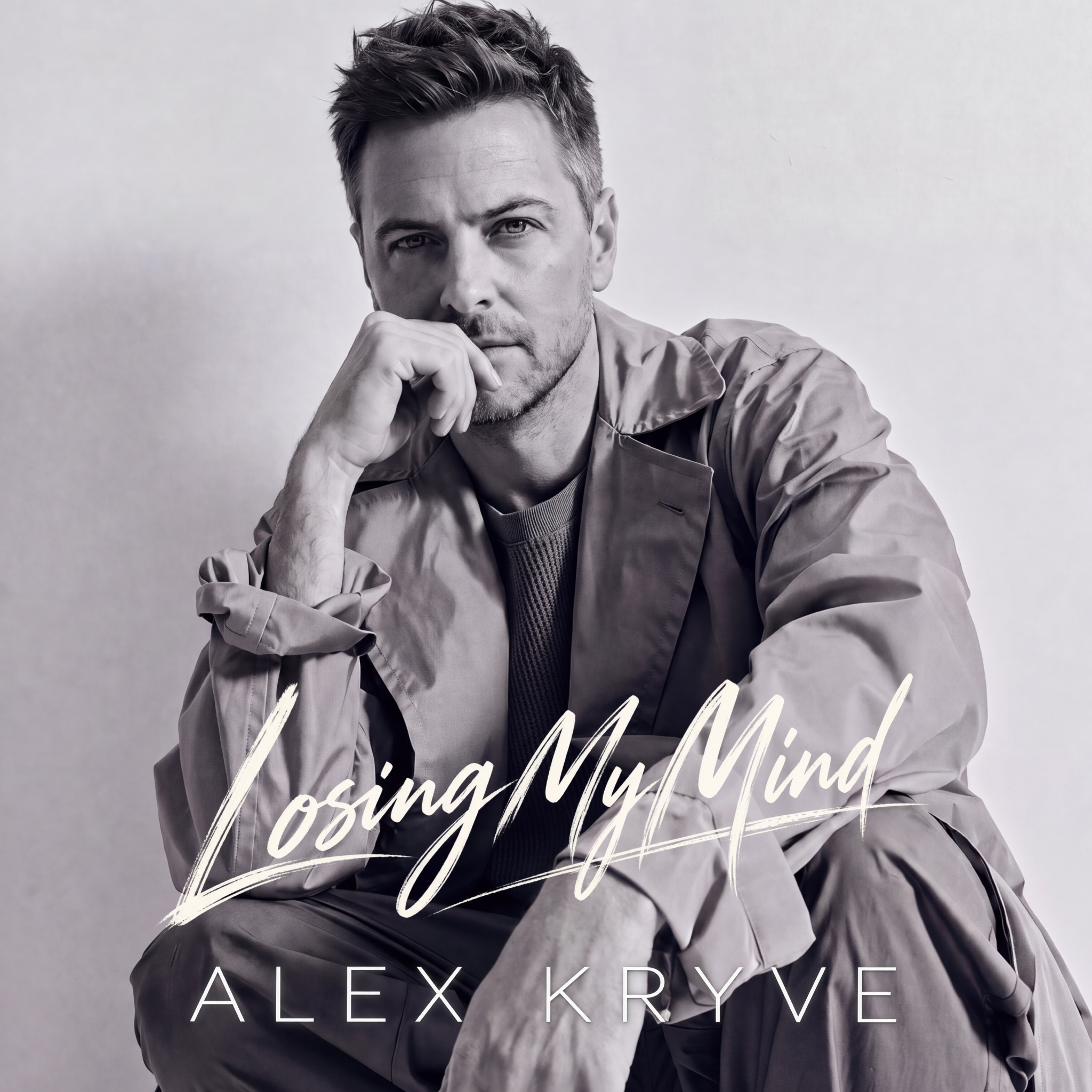
A Romance That Learned to Speak English
From an intimate music salon to a contemporary alternative song.
01Where the story began
+
The story of Losing My Mind began long before the song found its present sound. To tell it, I have to go back almost ten years—to 2016, when a concert programme called Russian Romance appeared at the theatre.
It opened our autumn season. It was less a conventional stage production than an intimate music-theatre evening in a small round hall. There was almost no distance between the performers and the audience. A piano, guitar, violin, cello, two dancing couples and live music created the atmosphere of an old private salon.
These evenings never felt like formal concerts. They were warm, close and almost familial. Perhaps that is why audiences loved them so much.
From one season to the next, the project grew. New material appeared, the programme changed, and my own understanding of romance expanded. At first I was interested mainly in its theatrical nature—the meeting of music, words, performance and movement. Gradually, however, I went deeper into the history of the genre, its poetry and its inner drama.
In 2017, I went through a long period of physical recovery. Whenever I was able, I tried to return to the theatre and to work. In 2018, the new season once again opened with the Russian romance programme.
Over time, the project became not only a concert programme but also a field of research. I studied texts, music and the stories behind the works, wrote extensively, and kept sketches for future songs. At the same time, life led me into other creative directions: I worked in film, developed concepts for animated series and films, and continued writing music.
Then the pandemic arrived. Restrictions changed the theatre, our familiar way of meeting an audience, and the very shape of our work. The Russian Romance project, already going through a period of change, came almost to a standstill.
Today, moving from the stage into the online world feels natural. At the time, it did not. After the immediacy of a live audience, it was difficult to imagine that the same closeness and emotional energy could exist on the other side of a screen. Yet my exploration of romance never stopped. It continued in recordings, drafts, musical themes and individual lines.
02It began as a poem
+
The earliest version of what would become Losing My Mind appeared around 2016–2017. It was then a Russian text—a poem that could be sung with a six-string guitar.
The song did not yet have its present form or its contemporary alternative sound. It existed as an intimate confession: a voice, a guitar, and a story told almost to a single listener.
At its heart was an emotional state I knew well from a separation I had lived through. It later found its way into several of my songs. But I do not want to explain every line through the circumstances of my private life. It matters more that listeners are free to find their own feelings and memories in the story.
When I returned seriously to the material of Russian romance, its imagery brought me back to that old poetic sketch. This time, however, it needed another language, another form and a new musical space.
Схожу с ума · Alex Kryve
Listen to the Russian recording discussed in the story below.
From Russian Romance, the concert programme that opened the theatre season.
Music and lyrics — Alex Kryve℗ © 2020 Alex Kryve03What remained of the romance
+
Today, Losing My Mind sounds like a contemporary alternative pop-rock song. It has new instruments, a dense arrangement and the energy to be performed on a large stage. Inside, however, it is still a romance.
The harmonic foundation of the chorus, its chords and the character of its melodic movement remained from the original version. Most importantly, the confessional form remained.
It is an inner dialogue, a first-person opening of the soul. It carries the tragedy of love, a sense of inevitability, and the impossibility of negotiating with one’s own feelings. Emotionally, the song is close to the urban—and in some ways even the cruel—romance: a person understands that what is happening causes pain, yet can neither undo what has been lived nor command the heart to stop feeling.
This is a very intimate song. Its modern arrangement allows it to sound expansive, but deep inside it there is still that first performer with a guitar, telling a story to one person.
04Why it is in English
+
The move into English was a conscious decision.
I wanted to carry the emotional nature of Russian romance into an international musical space—not merely to translate a text, but to discover whether the genre itself, with its confessional quality, its tragedy, and its particular relationship with love and memory, could speak another language and remain recognisable.
Russian-speaking listeners, wherever they live, often recognise the intonation of romance immediately. It exists in our cultural and emotional memory. The response to the first announcements of the revived project showed this clearly: people in different countries heard something close and long familiar in the music.
But I wanted to widen that circle. I wanted to know whether the soul of Russian romance could speak in English—and be heard by people who did not grow up within Russian-speaking culture.
That is why Losing My Mind is not simply an English version of a finished Russian song. During the work, it gradually became an independent piece. Its language changed, a new form emerged, and the modern arrangement carried it fully into today’s musical world. Its emotional origin, however, remained the same.
05A bridge between two worlds
+
Losing My Mind has existed in its current form for about a year, but the final arrangement appeared only recently. The work was completed after Evgen Voronenko’s passing. In shaping the new sound, we used preserved samples, loops and other musical materials created by Evgen—exactly as he wanted: so that his work could continue to live and become part of new pieces. A person cannot be replaced, but their creative work can continue to sound.
Over the last two years, I have gradually been returning to the Russian romance project. I can see that it has its own audience and that interest in this material has not disappeared.
Perhaps it will never be a project for everyone. That does not trouble me at all. Art does not have to speak to the whole world at once. Sometimes its task is to find those who truly need that particular conversation.
For me, Losing My Mind became a bridge between two periods of my creative life. On one side are the intimate round hall, live instruments, two dancing couples, the closeness of the audience and the atmosphere of a private music salon. On the other are the digital world, contemporary technology, alternative rock and the possibility of speaking to listeners in many parts of the world.
Almost ten years ago, this song began as a Russian poem that could be sung with a guitar. Today it is in English and belongs to a completely different musical world.
Yet at its centre remains the one thing without which a true romance cannot exist: a person left alone with a feeling, finally deciding to tell the truth.
I am losing my mind over you…