Today, the words Russian romance almost automatically bring a certain set of images to mind: a guitar or a piano, dim light, unhappy love, separation, evening, a road, autumn, a memory. But historically, the Russian romance was far broader than this familiar image.
It spoke not only of love. It spoke of freedom and loneliness, poverty and social inequality, war and exile, home and the road, human dignity, death, memory, nature and fate. Its protagonists could be an aristocrat or an officer, a young woman or a wanderer, a coachman, a poor old woman, a city clerk, a village watchman, or simply someone left outside the world of comfort and security.
And the romance itself never belonged to one social class alone. Having begun its journey within the culture of domestic music-making and the fashionable drawing room, during the nineteenth century it gradually moved beyond them — to clerks, merchants and craftsmen, into taverns, to the outskirts of the city, and eventually into rural life.
In a way, the entire history of the Russian romance is a journey. From the drawing room — into the city. From the printed score — into oral tradition. From a known author — to a song that, a few decades later, people might already call a folk song. And from one person’s private experience — into the memory of an entire age.
ORIGINS
When a Poem Wanted to Become a Song
The word romance itself was born far from Russia. Its distant history begins in the Spanish literary tradition, but by the eighteenth century, in European culture, the word had already come to describe a small vocal work — intimate, personal, intended not so much for the grand stage as for someone listening nearby.
Russia encountered this form at exactly the right moment. By the end of the eighteenth century, it already had a rich culture of domestic singing. There were kanty, lyrical songs, arrangements of folk melodies, and authored compositions often referred to as “Russian songs.”
And at the same time, something else was happening. Educated society was beginning to take folk song seriously. Songs were written down. Collected. Published. Composers turned to their melodies.
But then an extraordinary reverse process began. A professionally written song could become so popular that it left the printed page and entered everyday life. People began singing it without music. They changed the words. They forgot the name of the author. And after some time, no one could be entirely sure anymore: had a composer written this song — or had people always sung it?
It was here, on the border between written culture and oral tradition, that the phenomenon later known as the Russian romance began to take shape.

THE CLASSICAL ROMANCE
A Few Minutes of a Human Life
The true flourishing of the Russian romance begins in the first half of the nineteenth century — and that is hardly accidental. Romanticism comes to Europe and Russia. And with it, the very idea of what is worthy of art begins to change.
Great history needs wars, states and heroes. But suddenly it becomes clear that art may need much less. One meeting. One letter. One sentence left unsaid. A memory. Jealousy. The night before a farewell. A few minutes of happiness.
For the first time, the inner human being moves so insistently to the centre of art. And the romance fits this new way of feeling the world almost perfectly. A novel may need hundreds of pages. A romance may need only three minutes.
We almost never know the entire biography of its protagonist. We do not know what happened a year before the song began. We do not know what will happen tomorrow. We are simply placed inside the most emotionally charged moment of a life. Someone is waiting. Someone has lost something. Someone still hopes. Someone already understands that everything is over.
That is why a good romance feels like a door suddenly opened onto someone else’s fate.
It was in the first half of the nineteenth century that works by Alexander Alyabyev, Alexander Varlamov and Alexander Gurilyov appeared. Later, the romance became an important part of the music of Glinka, Tchaikovsky, Rimsky-Korsakov, Rachmaninoff and many other composers.
But something else was happening too. Russian music was meeting great Russian poetry. Pushkin. Zhukovsky. Lermontov. Delvig. Later — Tolstoy, Apukhtin, and many others. A poem was given a second life.
And this is where one of the great differences between a fine romance and an ordinary song becomes visible. The music does not simply carry the words. It understands them. Sometimes a change of harmony says more than the line itself. Sometimes a pause becomes part of the meaning. Sometimes the piano seems to know slightly more about the protagonist’s fate than the protagonist does.
In the classical romance, the instrument stops being mere accompaniment. It becomes a second storyteller.
Was the Romance Music for the Aristocracy?
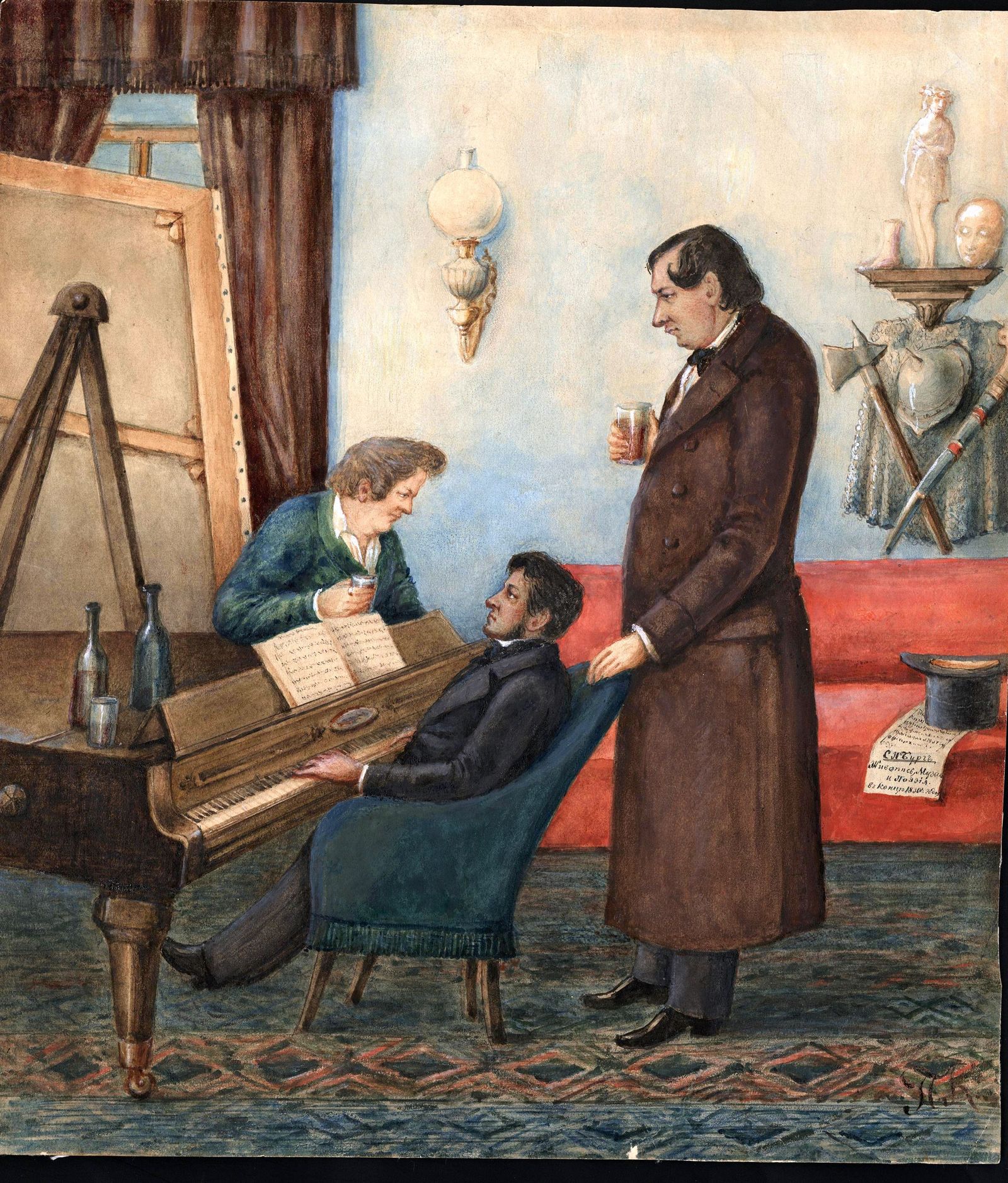
At the beginning of the nineteenth century — to a large extent, yes. For aristocratic society, making music at home was a completely natural part of life. People read poetry in the drawing room. They sang. They played the piano. They staged small performances. They showed new musical works to friends long before those works might ever reach a larger stage.
For the romance, this environment was ideal. No theatre was needed. No orchestra. No scenery. There was a voice. A piano — or a guitar. And a few people listening.
The romance, in fact, does not require distance between performer and audience. Quite the opposite. The shorter the distance, the stronger it can become.
But it is here that one of the most interesting chapters in its history begins. Because the romance very quickly ceased to belong to the drawing room alone.
THE FOLK AND SOCIAL LINE
What Happened When the Romance Walked Out the Door
The guitar played an enormous role in this. A piano stays in the house. A guitar can travel. And music travelled with it. It could be heard in a wealthy estate and in a modest apartment, among clerks and craftsmen, in a tavern, on the road. It stopped belonging to one particular room. And gradually it stopped belonging to one particular class.
This matters. Because the familiar picture of the Russian romance — “a lady, an officer, a piano and a broken heart” — describes only one part of it.
The world of ordinary people was always nearby. The steppe. The road. The hut. The village. The soldier. The peasant girl. The traveller. The coachman. Night. A snowstorm.
At first, these could be images of popular life seen from outside by an educated author. But gradually even stylised “folk character” became too narrow for the romance. It began to look at human life more closely. And it discovered the social world. Poverty. Powerlessness. Loneliness. Inequality. The person society does not notice.
Alexander Alyabyev is especially interesting in this respect. Alongside love lyrics, we find works with titles of an entirely different kind: The Tavern, The Hut, The Village Watchman, The Beggar Woman.
This is no longer an idealised pastoral world. And it is no longer simply a love story. The romance begins to speak about people whose lives had rarely before become the subject of chamber music. In this sense, it moves in parallel with nineteenth-century Russian literature. There, the famous “little man” appears. Here, his voice begins to be heard.
But Was the Romance Really Folk Music?
This is where the answer no longer fits neatly into a simple yes or no. The romance was not born as peasant folklore. But eventually it reached it.
Urban songs and romances spread orally. Texts changed. Four verses remained from ten. Someone added a fifth. The melody became simpler. The key changed. The author’s name disappeared. And something close to alchemy took place: an authored song became a folk song.
Sometimes the process completed an even more remarkable circle. A folk melody inspired a professional composer. The composer created a new work. That work became popular in the city. The city song travelled back into popular tradition. And several generations later it returned almost unrecognisable.
The Russian romance therefore found itself in a very unusual position. It never belonged entirely to professional music. And never entirely to folklore. It lived constantly between the two.

THE CITY
When the Romance Found a New Protagonist
In the second half of the nineteenth century, Russia itself was changing. Cities were growing. There were more clerks, employees, students, workers, craftsmen and small traders. A vast urban world was developing — with its own habits, fears, entertainments, stories and its own language of feeling.
And once again, the romance appeared exactly where it was needed. Its protagonist no longer had to be an aristocrat. He worked. She rented a room. Someone waited for a letter. Someone met the person they loved on a city street. Someone saw them off at a railway station. Left. Returned. Was left alone.
We might describe it with an almost modern expression: mass personal lyricism.
Emotions that had once belonged mainly to the chamber culture of educated society were becoming the language of an enormous urban audience. The music often became simpler. The melody had to be easy to remember. The guitar increasingly felt more natural than the piano. But the emotional intensity did not disappear. Sometimes it became even stronger.
The Gypsy Romance: A Separate Genre or a Particular Way of Performing?
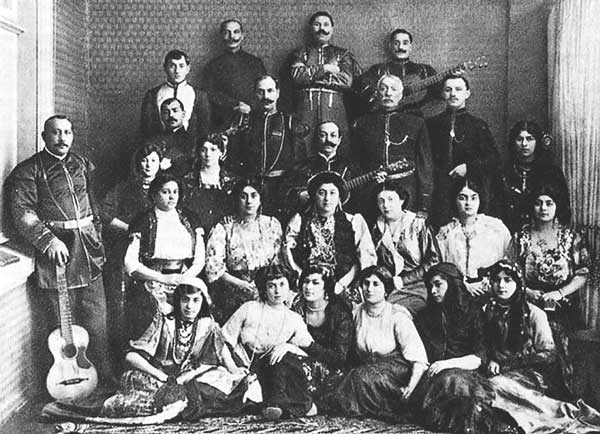
Here another important participant enters the story — the professional Roma performance tradition. Roma choirs had existed in Russia since the eighteenth century and became immensely popular. Performers included Russian songs and romances in their repertoire — but they sang them differently. More freely. More emotionally. With sudden changes of tempo. With pauses. With unexpected accelerations. With a movement from an almost intimate beginning to an explosive climax. The guitar became central to this manner of performance.
This is why the expression Gypsy romance should not be understood too literally as a term for ancient traditional Roma folklore. In many cases, it was a Russian work transformed through a distinctive performance culture.
It was an encounter. And that encounter had a profound effect on the later history of the urban romance as a whole.
When Feeling Becomes Melodrama
Every emotional form eventually finds its extreme. For the urban romance, that extreme became what was known as the cruel romance.
Here, no one was particularly economical with suffering. Betrayal. Madness. Illness. Murder. Suicide. Death.
To a modern listener, some of these plots may seem almost astonishing in their concentration of tragedy. But that was precisely their purpose. In three or four minutes, the listener was given a complete melodrama. What might require several acts in a theatre could be compressed into a few verses of a romance.
And the most interesting thing is that this was no longer an elite tragedy. It existed inside mass urban culture. An ordinary person received an opera of their own. Only instead of an orchestra — there was a guitar.
THE EARLY TWENTIETH CENTURY
When an Intimate Song Became Mass Culture
Around the turn of the nineteenth and twentieth centuries, not only music was changing. The way music existed was changing too. Sound recording developed. Printed sheet music became more widespread. Popular entertainment expanded. Performers appeared whose names were known not only in a few drawing rooms or in one city, but to an enormous audience.
Anastasia Vyaltseva. Vera Panina. Nadezhda Plevitskaya.
The romance moved onto the large stage. And here a remarkable paradox appeared. It became mass culture — but it did not stop being intimate. A thousand people could sit in the hall. Yet a good performer could still create the feeling of speaking to one person.
Later, the gramophone record appeared. And this quality became even stronger. A person could sit alone at home. Put on a recording. And the artist’s voice would suddenly be only a few steps away.
In a way, the romance was perfectly prepared for the coming age of recorded sound.
What Did the Russian Romance Really Sing About?
Of course, love. Happy love. Unrequited love. Forbidden love. First love. Last love. Jealousy. Betrayal. Memory. Return. Separation.
But if we leave only the theme of love, we lose half the picture.
The Russian romance also spoke about the road. War. Military life. Exile. Homeland. Poverty. Freedom. Loneliness. Motherhood. Old age. Death. Human dignity. The impossibility of changing one’s fate.
And constantly — nature. But nature in the romance is almost never just scenery. Night knows what is happening to the human being. Autumn suffers with them. The steppe becomes loneliness. The snowstorm becomes confusion. Spring becomes hope. The outer world becomes an extension of the inner one.

WHAT MAKES A ROMANCE DIFFERENT FROM A SONG?
It is impossible to draw an absolutely precise line between them. Perhaps that is part of the charm of the genre. But one difference can almost always be felt.
A song may address a group of people. It may be sung together. It may accompany a celebration, a dance, a march, work, or a journey.
A romance usually speaks differently. It confesses. Its protagonist is almost always alone with their own feeling. And even when a large hall is listening, the romance still seems to be addressing one particular person.
In the classical romance, something else matters too — the relationship with the word. The text cannot simply be replaced by another. The music is tied to it. Sometimes to one particular word. To the breath of a line. To a pause. To what has been left unsaid.
And so, perhaps, the most accurate definition of the romance lies not in musical theory at all.
A romance is a personal story told through music to one person — even when thousands are listening.
FROM THE ARISTOCRATIC DRAWING ROOM TO THE VOICE OF THE CITY
If we look at the entire nineteenth century as a whole, we begin to see a remarkable movement.
The romance is born within educated chamber culture. It meets great Russian poetry. It borrows folk intonations. It leaves the salon. It picks up a guitar. It enters the city. It encounters the Roma performance tradition. It begins to speak in the voices of different social groups. Sometimes it loses the name of its author. It becomes almost folklore. And then it enters the age of the stage and sound recording.
It is constantly moving between worlds. Between literature and music. Between professional art and folklore. Between the aristocratic drawing room and the tavern. Between the great composer and the unknown performer. Between the stage and private life.
Perhaps that is precisely why the Russian romance outlived the age that created it. It does not tell the story of society from above. It allows us to hear that history from within. Through the voice of one human being.
OUR PROJECT
Not a Museum, but a Conversation Continued
Our aim is not to place the nineteenth century behind glass. And not to recreate, literally and exactly, an evening in a Moscow or St Petersburg drawing room two hundred years ago.
What interests us is something else. What happens if we open these poems again today? These stories? These melodies? What in them is still alive?
Some works have come down to us together with their original music. Some exist in several versions. In some cases the melody has changed. In others, the text. Sometimes the name of the author is known with certainty. Sometimes tradition has almost erased it.
That is why every romance, for us, is also a small investigation. Who wrote the words? Who wrote the music? When did the work appear? How did it change? What belongs to the original author — and what was added later by tradition?
But historical accuracy does not mean museum-like immobility. Because the romance itself was never still. People carried it from one home to another. Sang it from memory. Changed it. Reinterpreted it. Every generation heard it in its own way.
We want to preserve the origins of these works, their authors and their history. But at the same time, we want to hear them with our own ears. With the eyes and ears of the twenty-first century. Without turning the past into decoration. And without pretending there is no distance between us and the people who lived two hundred years ago.
That distance exists. But some things have hardly changed. Waiting. Jealousy. Loss. Loneliness. Hope. Love. Memory.
That is why this project is not an attempt to go back.
It is an attempt to continue a conversation that began almost two centuries ago.
Sources & Collections
Museum, library and archival collections used to ground the historical narrative and visual edition.
- 01The State Tretyakov Gallery — Vasily Tropinin, The Guitarist
- 02Russian National Museum of Music — The Musical Drawing Room of Pushkin’s Era
- 03Russian National Museum of Music — Alexander Alyabyev and the social voice of the romance
- 04National Electronic Library — Russian Romance collection
- 05Culture.ru — The Urban Romance
- 06Culture.ru — Russian Urban Folklore
- 07Wikimedia Commons — The Guitarist, public-domain image
- 08PICRYL — Anastasia Vyaltseva, public-domain photographs